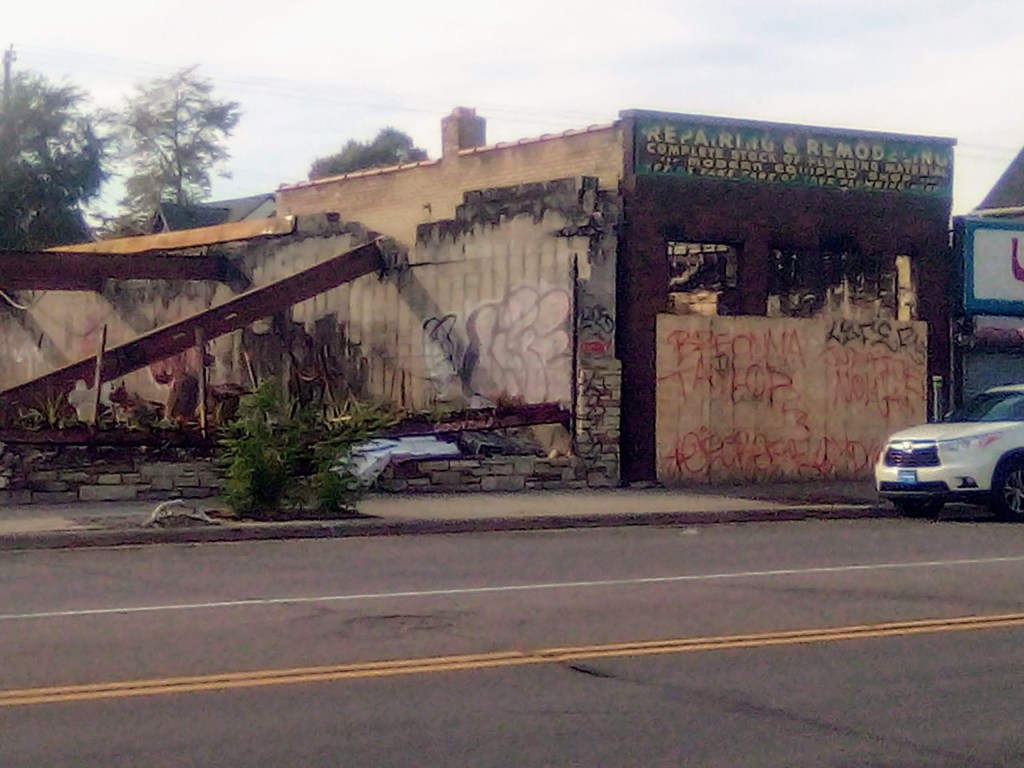
Dispatch from the Apocalypse
By Carz Nelson
Monday, May 24, 2020
I was out of town for a couple months. I returned to Minneapolis on Memorial Day. My luggage was lost, so when I arrived I didn’t have as much as a bottle of shampoo. No food, either. There was nothing in my fridge, just some ice cream in the freezer. I ordered a pizza, getting extra so I had leftovers in case it would take me a while to get to the store the next day.
Tuesday, May 25, 2020
I began the day with my usual routine. Yoga. Breakfast. Read the news. The local news had a story about someone who had been killed by the police the day before. A crowd of people watched as cops slowly squeezed the life out of a man named George Floyd. The police ignored the people begging them to stop torturing him.
This is hardly the first time the Minneapolis police have acted like this. It wasn’t some one-off incident. Minneapolis cops had a reputation for viciousness going back generations. Time and again, politicians promised to clean up the department, but somehow the racism and violence always stayed. This new video showed that the police were so confident of themselves that they murdered citizens in broad daylight- with cameras running! I might not be Black, but I am human. When I saw that they thought they could get away killing my fellow citizens I felt not just anger, but hatred. This was simply intolerable. My tax money helped pay for this murder.
I checked to see when the protest would be. Naturally, there’d be a protest. There always was. There needed to be protest. If not for the steady pushback of protest, there was no saying how extreme the police would become. They were accountable to no one but whatever public outrage could be summoned. Protest could only blunt the problem, however. In the end, would likely be some kind of “investigation” before the police officers were absolved of any crimes. The cops would still be corrupt. The press would paint the protestors as a bunch of outlaw Antifa Black Panther scary-scaries. Nonetheless, it was important to give pushback in order to prevent the authorities from getting even more violent.
There were risks. It was the middle of the Covid 19 pandemic, after all. Violence against African Americans was a problem that went back 400 years, however, and Covid just appeared on the scene. In my mind, racism was the more intractable, deadly problem in society. By necessity, standing up for George Floyd took precedence over my concerns about the pandemic. Covid wasn’t even my primary fear. Did I mention that Minneapolis cops were violent? They tended to beat people up who pointed this out. A protest against police brutality always came with the risk of additional brutality. I picked out a sturdy pair of running shoes from my closet.
The demonstration was located on the street where George Floyd was murdered, about a mile from my house. As I walked, it was easy to find my destination from the news helicopter that circled above the location. The streets were crowded with people heading for the site. After having been isolated for two months, it was thrilling to see so many people. Many of them carried homemade signs reading “George Floyd”, and “BLM” The scene reminded me of pictures I’d seen of demonstrations in the 1960s. I thought about how cool the ‘60s were. Maybe we’d return to that era. Maybe 2020 would bring a more protests- and a summer of love! That would be awesome.
As I drew near to the center of activity, I noticed that although there were thousands of people, it was remarkably quiet. I realized that a man had died, and the crowd was grieving. This was an occasion for mourning. I felt guilty for my momentary flight of hippy fantasy.
The center of activity was outside of the Cup Food store where Floyd had made his final, fatal purchase. A shrine was already starting to grow, with flowers, signs, and artwork amassed on the sidewalk in tribute to the dead man. The crowd was thick. Most everyone wore a mask, but social distancing was impossible. Speakers spoke. I listened for a short while, but I felt nervous in such close proximity to so many people.
I milled through the crowd. People unfamiliar with the Upper Midwest sometimes assume that the region is populated entirely by white people. This simply isn’t the case; a fact made obvious by the diversity of people at the protest. Black, Native, Somali, white, and Latinx people were all well represented. And the diversity wasn’t limited to race. Gay and straight, young and old; virtually every demographic to be found in Minneapolis could also be found at the protest.
A loud, whirring noise erupted behind me. Suddenly there were people running past in fear. I had no idea what that noise was, but I didn’t want to take chances, so I bolted for cover.
A loud, whirring noise erupted behind me. Suddenly there were people running past in fear. I had no idea what that noise was, but I didn’t want to take chances, so I bolted for cover. Perhaps the police had some new crowd control weapon, maybe one of those sonic devices that cause brain damage. I dodged behind some bushes with a group of women. We conferred with each other and found that none of us knew precisely what we were running from. Cautiously, we peeked out from the foliage to see what could be making that loud noise. We felt a little sheepish when we saw that it was a group of men on scooters with tricked out mufflers.
The relative silence of the crowd ceased once we started to walk. People belted out many traditional chants that have been around for decades.
What do we want? Justice! When do we want it? Now!
There were also chants of more recent vintage.
Say his name: George Floyd!
We marched through neighborhoods on Minneapolis’s south side. Residents watched from their porches and windows. They waved to the passing throngs, many of them raising a fist in solidarity. Quite a few waved hastily scrawled signs proclaiming “Black Lives Matter”. Other signs read “George Floyd”. We felt united and strong. There was also a lot of sorrow, and yes, anger. Most of the marchers wanted a peaceful protest, but everyone sympathized with the young guys who wanted to overturn cars, (they did not turn over any cars.)
We walked down a highway and stopped traffic. As we walked between lanes of traffic. I tried to read the mood of the drivers who suddenly found themselves stuck in an ocean of protesters. Nobody looked particularly angry, but then no one waved or showed support, either. They all looked rather blank. They might have been too surprised by this sudden turn of events to display any sort of reaction.
We walked to the Third Precinct, which was closed and shuttered. The crowd hurled its anger at the building, but that seemed completely futile. It was locked up tighter than a fortress. It was impossible to imagine the crowd could have much of an effect on this municipal Borg cube. People gave speeches about taking back power from the state. It all felt very revolutionary. I eventually went home, however. I was tired from walking. This could go on all night, I thought.
It went on a lot longer than that. Things escalated after I left. The police attacked the protesters with tear gas and paint bombs, driving them back across the street. To Target. It didn’t take long before Target’s windows were broken and the store was looted, as were other businesses in the area.
Wednesday, May 27, 2020
I walked down Lake Street in the aftermath of the protest against the murder of George Floyd, the man killed by police in front of a crowd of witnesses. The casual demeanors of the murderers were evidence that Minneapolis police got away with brutality for so long that they did not feel the need to hide their violent activities.
I grieved to see the boarded up storefronts of mom and pop businesses. Scandinavian gift shop Ingebritzens sustained some damage, yet they featured messages of support for the community on their boarded-up windows. As I made my way down the street, I saw that most of the damage seemed to be confined to graffiti and broken windows, though no doubt there was some looting going on once those windows were broken.
Helicopters flew overhead. They had become a staple feature of the neighborhood since the protests started on Tuesday night. Thousands of people walked down Lake Street, phones held aloft as they each answered the urge to document the moment in history. I drew near to the precinct house that was the locus of activity. It was surrounded on two sides by some very angry people. The back alley and the side parking lot were actively defended by the police and remained free of protesters while I was there. Most of the crowd was focused on a speaker who I was unable to hear. The crowd was so dense I didn’t want to worm my way to the front for better listening.
I was distracted by the sound of breaking glass, and turned the corner just in time to see a young man with a good arm throwing rocks at the second floor windows that had somehow remained intact until this point. All of the windows on the first floor were broken from without and boarded from within. Abandoned barricades seemed to show that there had been a battle for control of the front of the building, a battle that had clearly been lost by the police.
Kitty-corner from the cop shop lay the smoking ruins of an auto parts store. The building was burned to the ground. To anyone familiar with the intersection, the sight of such carnage in the prosaic setting was incomprehensible. My mind struggled to make sense of what my eye saw. Where once there was a building so ordinary and common that I barely noticed it enough to remember it, there now was a smoking pit of black ashes. My eye was constantly driven to that bare spot in the landscape where a building should be just as compulsively as the tongue is driven to explore the new gap when a tooth is lost.
A small, grassy strip lay directly across the street from the police station. People rested here, some just sitting and relaxing, others engaging in earnest discussion about race and justice. Bottled water was available and free for the taking. Beyond this area, a parking lot consumed several acres. It provided parking for the strip mall that included Target and several other stores. At first glance, the scene across the lot looked normal. There was rather a lot of traffic for a weekday, but only when I drew closer did it become clear it was a parking lot full of looters. Traffic buzzed along, as people filled their cars with looted goods and circled around. Crowds of pedestrians streamed towards the entrances.
I approached Target. A sign hung from the building, “Now Hiring! $13.00 an Hour”. An extended, windowless wall was decorated with a stream of graffiti 100 feet long. Some of the graffiti addressed political concerns. Some called for racial justice. Others offered witty commentary on consumer culture, (“the New Target!” mocking an old ad campaign.) A few of the graffiti were simple declarative profanities, and one or two gang symbols could be discerned in the churning stream of words. Dozens of people walked and drove slowly past this wall, holding up their phones and carefully recording every word and image. The wall had gained a symbolic value; it contained the cries and the anguished communication of the community. It was a relic to be treated with respect and to be recorded for posterity.
Looting was still going on; this was clear from the activity of the cars buzzing around like bees after honey. Nonetheless, I was shocked when I reached Target’s main entrance. A full day after the looting had started the building lay open and unprotected. Fire alarms blared loudly and unceasingly. Water streamed across the threshold from the ceiling sprinklers. The interior was without electric lighting and shadowy forms could be seen moving around inside.
It was a terrifying scene. Surely the inside of that store was a disaster zone and completely unsafe. One would have to be crazy to go in there. Yet a steady stream of people did, in fact, go in there. Approximately as many of them came out carrying away what consumer goods remained. It was remarkable that after an entire day of looting there was anything left to take. I watched more people go in and come out. The mist shooting from sprinklers at the darkened entrance gave the impression of some warped funhouse from a very wrong dimension. As foolhardy as it seemed, my curiosity got the better of me. Slowly, cautiously, I stepped through the mist into the building.
The interior was dimly lit from a few windows that had been torn out. More sprinklers emptied from the ceiling. Three inches of water covered the floor. Empty shelves and ruin lay everywhere. Twisted metal, sopping garments, and chewing gum were strewn about. Shattered toys floated past. A loud banging noise came from the dark depths of the store as some people dismantled the ceiling for the recyclable metal it contained.
There were about twenty people inside. Some of them were eager to pass along tips to their fellow looters, “There’s still a ton of food left in aisle five!” Others were focused on the task, and did not speak or look around as they quickly attended to business. Everyone seemed friendly enough. Yet the adventure felt dangerous. Things could have gone south pretty fast if even one person in the store had antisocial intentions. A naked manikin floated past. There were more ironic metaphors here of consumer culture than could be found in a George Romero movie. It was the world turned upside down. It was the consumer apocalypse.
When a fish takes a dump in the fishbowl, no one faults it for polluting the water. The fish lives in the water; it cannot act outside of the water. Some people accuse looters of being opportunists. They say the looting has nothing to do with political protest. However, we live in a consumer world; a world defined by capitalism. Everything in this world, including protest, intersects with capitalism. Like the fish, we are immersed in this world. Our lives -as well as our deaths- are bounded by capitalism. George Floyd’s last action was one of consumerism; he purchased something at a store.
Personally, I had conflicting feelings about looting. There could be times and places where it was justified, and there were most certainly times and places where it was not. As the sign on the building suggested, people were expected to be grateful for crappy $13.00 an hour jobs. Stores like Target dangled consumer goods in front of their faces. The $13.00 wage, however, wouldn’t even cover daycare, much less pay for a big screen TV. The police brutality that killed Floyd and the economic brutality that sucked away the hope for a better future were part of the same system. The police existed to protect the engines of capitalism. Most of the looters were able to explain this at least on some level. It was made clear by the graffiti on the building; it was revolutionary. No peace no justice. Our future has been looted; loot back. Eat the rich. FTP. Presumably, opportunists intent solely on filling their shopping carts with infant formula and the latest in women’s fashions wouldn’t bother with call outs to Breonna Taylor and Trevor Martin.
Some people say that looters only hurt their own neighborhood. Target was hardly the corner store. Though publicly traded, it had originally been founded by the wealthy Dayton family. In Minnesota, it was still identified with them. The previous governor was a member of this prominent family. No one living near the Lake Street Target was ever invited for dinner over at the Dayton’s house. The Daytons did not borrow a cup of sugar. Target was as much a part of the neighborhood as was any other big box store.
I returned home where I had exactly one slice of pizza left. All of the stores and restaurants were closed because of the uprising. The situation looked dire, until I ran into my neighbor Holly who had just returned from one of the many food pantries that had spontaneously sprung up. She gave me a package of croissants, and so I lived to see another day.
Before bed, I checked the news for live reporting on the protests. I was immediately annoyed because on every single channel, they said the third precinct was located “downtown.” It wasn’t anywhere near downtown; it was over three miles away from downtown. This piece of ignorance came from the fact that the people writing and reporting the news were from the suburbs, not the city. Many people from outside of the city projected all kinds of bullshit on the people who lived there. They saw the whole place as one big urban jungle of stereotypes. By referring to the entire city as “downtown”, the media was negating the complexity and humanity of the south side community.
Displays of geographic ignorance aside, journalists reported that the police had fled the local precinct house, abandoning it to the protesters. Soon enough, a fire started in the building’s entryway. News helicopters circled above. Several other buildings burned freely. There was not a cop or firefighter within site. The authorities had given up the fight and withdrawn their players from the field. The Battle of the Third Precinct was over; the protestors’ victory was complete.
Thursday, May 28, 2020
I awoke early the next day. On the way to her essential job, my upstairs neighbor Sal yelled into my quarters to let me know that the power was out and I’d best mind the contents of my freezer. Ice cream for breakfast it is, I thought. After a quick round of yoga, I turned on my laptop. There was plenty of juice in the battery but the modem wouldn’t work without electricity from the wall, and so I couldn’t connect to the internet. I could run down the battery using it as a clock and listening to music, but that was about all it was good for at this point. I shut it off. Might as well save the juice. I’d neglected to plug my phone in the night before and it was dead. I was cut off from the world.
I wondered how much of the city was affected by the blackout. My imagination ran away with me, as I envisioned the nearby power transfer station in ruins. Sal called into work before she left that morning. They assured her the store would open, and she should come in. This clued me in that at least part of the city was functioning normally.
The gas stove still worked. I made coffee with a deep sense of gratitude for the appliance.
The gas stove still worked. I made coffee with a deep sense of gratitude for the appliance. I took my coffee to the front stoop in order to see what I could detect about the mood and status of the neighborhood, and perhaps the city. Everything looked normal enough. There was traffic on the streets. The helicopters that occupied the sky had flown away. It seemed quiet without that noise. I gathered as much information as the street would passively afford, trying to gauge the extent of the collapse of civilization. I noted that a few bright red Target shopping carts lay abandoned within view. Some of the cars driving by had placards in their windows protesting the death of George Floyd. More sirens and honking horns than usual, but if I hadn’t been looking for signs of disruption I might have missed it. Superficially, it looked like a normal enough day in the neighborhood.
A young couple came out of the apartment building across the street and stood on their stoop. I wandered over to them to ask for news. After some neighborly chitchat, they told me the power was only down in the immediate neighborhood. And Excel Energy promised to get it restored promptly. It turned out that although there were many small outages, the city had not plunged into apocalyptic ruin overnight. I felt strangely disappointed.
There was a bad moon on the rise. The morning’s quiet soon gave away to chaos throughout the city. All day long, there were sounds of sirens and explosions. The uproar was continuous. At any given moment, you could hear at least five sirens coming from five different directions. Often enough you could hear a lot more than five but at that point, they tended to meld together and it was hard to tell them apart. There was never even a moment of quiet. The city was consumed in a howling, banging cacophony.
Saturday, May 30, 2020
All week long, every time I tried to go somewhere I ended up back at the protest. I left the house on Saturday because I still needed shampoo. With my luggage lost, I was stuck without many of life’s necessities. All the big stores were closed because of the uprising. I guess you could say they were in mourning for capitalism.
As I walked down Bloomington Avenue, I noticed that there were many more people on the street than usual. Many of them carried snow shovels and brooms. I forgot about the shampoo and walked to Lake Street to see how the uprising was coming.
Events had reached a new stage. There was a noticeable difference in the demographics of the crowd. Which is to say, there were many more white people milling around. Some of them wore shirts that identified them as volunteers from one church or another. The neighborhood had been invaded by tourists and do-gooders.
People didn’t seem to mind that traffic was at a standstill. There was a carnival atmosphere as folks gaped at the boarded-up buildings and photographed the smoking ruins. So many had shown up to help with the cleanup that there was no glass left to clean. Frustrated volunteers stood idle with their shovels. The volunteers who handed out food and water could at least keep themselves busy keeping the crowd fed and hydrated.
I overheard a woman say with disappointment in her voice, “Maybe we should go downtown.”
Her companion replied with equal disappointment, “Downtown is probably cleaned up, too.” I was unable to locate a violin small enough to express my sympathy for them. I can only hope that someday their neighborhoods become disaster zones so that they can play cleanup to their heart’s content.
There were no more speakers or anyone doing anything overtly political at this location. There were thousands of people milling around, but the protesters had moved on. They were at marches and demonstrations throughout town. The Third Precinct no longer held their interest. Yet, something of the revolutionary spirit remained intact. The precinct was a broken shell. Thick black smoke poured from a back exit. I don’t know what was smoldering, but the smoke seemed darker and more noxious than might be expected from an ordinary burning building. I imagine if one were to burn down a police station in Mordor it would smoke like that. The only people who dared to enter the building either had gas masks on or else they were fools. There were at least a handful of such fools. Some of them were throwing furniture out of second floor windows.
There was no evidence of state control. In the intersection, at the very nexus of events, stood a man directing traffic. This guy was probably the only reason that Lake Street was moving at all. Someone asked him who he thought he was, directing traffic. He replied that he had just come upon the traffic jam, and he realized that this was something that he could do to help. What fascinated me most about it was how well he performed his task. I’m fairly sure I would bungle it up if I tried to direct traffic it looks like a difficult job, but he did a great job of orchestrating the vehicles and keeping them moving.
I walked past Target. Organized teams of volunteers painted over the graffiti that had been carefully documented by the previous days’ witnesses. The painters seemed aggressively cheerful. They reeked of self-satisfaction. I wondered if they thought about the words as they painted over them. If these voices that they silenced had any meaning. I’m sure they thought they were doing a good deed, but for whose benefit. Did they think the shareholders that owned Target couldn’t afford to hire people? Shouldn’t neighborhood people be paid to do this work? Why would anyone work for Target for free? They aren’t a charity.
These people were so self-righteous they annoyed me. Then I felt guilty for being annoyed. After all, weren’t they trying to help? They were, but they were doing it to make themselves feel good. Just like the news media, they had a two-dimensional impression of the city that was largely the product of their own projections. Unlike the man who jumped in and directed traffic, they weren’t responding to an actual need, they were reinforcing their self-images as saviors to the downtrodden.
I walked home. Small stores were the only thing still open. The American Indian Movement (AIM) started in Minneapolis and still had a high profile. They saw it as their duty to protect the neighborhood, especially the businesses and institutions that the local Native population relied on. It would have been a burden if the neighborhood stores all closed. There would have been many people without a way to get food. AIM negotiated with the small grocery stores in the neighborhood, promising to guard them against looters if they would stay open.
I found a store with its windows half boarded up. They were doing brisk business, since they were the only place open for blocks around. There weren’t any do-gooders spending their money on the local economy here. It was easy to tell these people were from the neighborhood. For one thing, they were racially diverse.
About ten people waited in line and talked about the recent events. Looting had exploded overnight. Businesses had been burned to the ground. By now, the news had come out that much of the looting and destruction came from provocateurs from outside of the city. Many people would use information like this to blame an out-group. In this case, I was half expecting the folks in the store to rail against white people, conservatives, rednecks, suburbanites or the like. Rather than point the finger at any specific group, however, they talked about how these outside looters were taking advantage of the justified protests in the city and trying to use them for their own purposes. There was a lot to discuss while we waited in line. The store’s proprietor actually had a run-in with looters before AIM extended their protection. The man was clearly traumatized. It must have taken considerable bravery for him to re-open, even with AIM backing him up.
This was the first place I heard an anecdote that would become famous in the neighborhood. Initially I suspected it was an urban legend. It was simply too good to be true. I was able to find detailed accounts from several reliable sources however. An AIM patrol came upon four young guys who broke the windows of a local business and were removing merchandise. The AIM members seized their wallets and cellphones. The miscreants were seventeen-year-old boys from Menomonie , a town in Wisconsin about 100 miles to the east of Minneapolis. The Indians sat the boys down and gave them a lecture. They told them they were lucky that they were caught by AIM, and not by the police. The police were not in a mood to play nice, what with everything going on. The police may well have started shooting first and asked questions later. Then they told them that it wasn’t good or right to come to other people’s neighborhoods and make trouble. There was trouble enough in this world. What would their mothers think of them, if they knew their sons were causing this kind of harm?
They decided to find out. They called each youth’s mother and explained the situation, then handed the phone to the sheepish kid to arrange for a ride home. The following day when the store reopened, AIM returned all of the purloined goods that they had confiscated from the youths.
Destruction had metastasized across the entire city. When I got home, Sal told me someone threw a rock in the store window while she was working. Everyone was all right, but it was traumatic for all who were there. That night it seemed like the whole neighborhood was going crazy. Rumors were flying that the KKK would be out in full force. It didn’t seem likely that they could cause as much trouble as they had the previous night, though. This time there would be a curfew, and National Guard helicopters tracking anyone who broke curfew.
Like everyone on my block, I put my trashcan in and removed loose objects from my yard. We discussed the situation among the neighbors and make pacts to come to each other’s assistance. The neighbor with the tallest house and the best view said she would watch out all night and if anything were awry, she’d signal from her balcony. We knew that if there were trouble, the cops wouldn’t come if we called them. AIM was patrolling the neighborhood that night. They made it clear that their priority was to protect Native people in the area. As a side effect, their presence would help to protect everyone, not just Natives. They were fine with this, but their primary objective was to help their own community. This seemed entirely reasonable. For the most part, people in the neighborhood were deeply grateful for the work that AIM was doing.
I watched my neighbors spring into action. So many of them knew just what to do; they were really good at this. I realized many of them moved to this country in order to be free of this kind of trouble. Others grew up hearing stories about family members being lynched, and were taught at a young age how to pull together as a community for protection. I felt a little embarrassed. These kinds of troubles belonged to other places or times. I never thought to see them in my America.
The large apartment block across the street was mostly occupied by Latinx families. A group of men from this building barricaded the road with their cars. They added some random traffic signs and tied ropes across the street. No one was going to turn down our street that night. I peeked down 24th Street and saw that people on other blocks were barricading their streets as well.
A group of mostly white people on bikes announced their friendly intentions before they turned down the street. We hailed them for news. They lived right down the block. They’d been out to the protests. They were full of energy, optimism, and adrenaline. To use the technical term, they were stoked. Curfew started at 8:00, and there were still some people outside. People with baseball bats patrolled 24th Street. A group of men stood at the end of the block, keeping watch at the barricade. They were there all night, guarding us.
Sunday, May 31, 2020
I woke the next day to find that once again, Minneapolis survived the night. With so many people watching out for trouble, the provocateurs and looters didn’t have the opportunity for much bad behavior. Aside from groups of itinerate protesters few people broke curfew, so it was easy for the National Guard to spot potential troublemakers.
Our street was much quieter now that it was barricaded. Before the barricades went up, tourists had been using the street as a shortcut from the highway to the Third Precinct. The main arteries were congested with traffic, so people had been detouring down residential streets. Many of them drove at breakneck speed, with little respect for the locals. It was a considerable relief to have at least this stressor gone.
Protests, demonstrations and direct action continued. There were two main axis of activity; the site at 38th and Chicago Avenue where Floyd was killed became the central locus for grief and mourning. The area remained blocked off from motor traffic after the event. It was a somber site with piles of flowers, artwork, and many spontaneous expressions of grief. Eventually, a BLM “cemetery” was installed nearby, with mocked-up tombstones with the names of Black people who were killed by the police.
The intersection of Lake St and Minnehaha Ave was the second axis of protest. This is where the Third Precinct lay in smoking ruins, with the gutted Target across the street. Many buildings in the area were burned to their foundations, and the smell of smoke would haunt the area for weeks. After the first day of protest, these two areas were occupied by BLM and their allies. What 38th and Chicago was to grief, Lake and Minnehaha was to anger.
That week there would be near constant, ancillary demonstrations around town and eventually spreading across the metro region. Usually these protests were easy to find because there were helicopters circling above them. Marchers shut down the freeway. Students staged a sit-in at the capitol. Religious communities demonstrated. Many different ethnic groups rallied to show their support of BLM; including Somalis, Mexicans, and Natives. The LGBT community canceled Pride celebrations to march for George Floyd. The metro area was alive with protest.
It was quiet at night. The street was still barricaded and there was no automobile traffic. I stuck my nose out the door and was awed by the stillness. I wondered if anyone was patrolling 24th St. I walked down the block to check. Half way down the street behind me, a group of about five Somali men got into a car. I reached the intersection, and saw that aside from myself and the car of Somali men there was no one to be seen anywhere. The Somalis drove to the intersection. A man got out to move one of the traffic signs so that they could drive around it.
“What are you doing out here?” he asked, his voice clearly alarmed. “Don’t you know it’s not safe?”
“I had to come out and take a look,” I said somewhat sheepishly. “I was curious.”
The man laughed and bid me goodnight. He got back in the car and they sped off. I realized they hadn’t moved the traffic sign back where it belonged. It wasn’t a very effective barrier like that, so I dragged the sign back into place. The scraping metal was loud on the asphalt and I worried about the noise disturbing my neighbors.
As I finished this minor task, a voice called out from the apartment block, “Thank you!”
“Your welcome,” I called back.
“Yes, thanks!” another voice called from a different window.
Then came a child’s voice, “Thank you!” I realized that people in the building were monitoring the road closely even if they weren’t outside breaking curfew to do so.
For the time being, we were living in Indian Country, and glad of it.
June 1- 3, 2020
Still under curfew, and bands of protesters were roving around town. Little Earth, the largest Native housing residence in the neighborhood, played recordings of traditional drumming at full blast. The sound permeated the neighborhood for days. Most people- Native and non-Native alike- were reassured by the sound of the drums. At this point, AIM was the closest thing we had to a government, and the drumming was a good reminder of their presence. For the time being, we were living in Indian Country, and glad of it.
The city government was still functioning at some level, but they had too much on their plate to provide services to our neighborhood. Among other things, they were working with the feds to deal with the violent agitators and provocateurs who were trying to compromise the uprising. They kept the citizenry informed of their discoveries, and issued advisories of what to look out for. They issued warnings about people who had been spotted wearing flak jackets and carrying assault rifles. Cars were driving around town with blacked out windows and without license plates. Stockpiles of bricks were left in commercial areas, perhaps with the hope that they would be handy projectiles at the next round of protests. People also reported finding propane tanks, and bottles filled with gasoline and other volatile substances. It was beyond creepy. Sinister people were targeting us for unknown reasons. We’d done nothing to attract this evil to us, yet strangers were apparently waging a covert war against us.
The police eventually apprehended some of these people, and with exposure, it became less mysterious. It turned out that many of the looters came from the metro’s hinterlands, the suburbs and surrounding countryside. Some of them were members of racist biker gangs. Their attacks on the city were apparently part of an effort to start a race war.
In some regards, this was part of a longstanding pattern. People from the Upper Midwest’s backcountry had always come to the Twin Cities of Minneapolis and St. Paul, looking for action. For some people that meant scoring drugs, or patronizing prostitutes. For a certain contingent, it meant looking for fights and acting out violently. It came back to the issue of projection. The city was imagined as a place of poverty, vice and sin. Just as the do-gooders pitied the miserable ghetto dwellers, thrill-seekers and anti-social types viewed the city as a place so venal and violent their own destructive activities might go unnoticed. In their minds, this behavior was morally acceptable because the city itself was unsavory, and so deserving of abuse. Racism was always part of the equation, but now it had crystalized into a political doctrine of white supremacy.
The irony of this hatred of the urban core was that the backcountry was dependent on the city, even as the city was dependent on the hinterlands. Regional economics were a complex interchange of goods and money between urban, suburban and rural areas. If the racists were successful in disrupting the city in a significant way, they would feel the impact along with everyone else. People in Menomonie and Robbinsdale would ultimately suffer from the economic hit the region took.
Thursday, June 4, 2020
There was a revolutionary feeling in the air as people took on the jobs that needed to be done without waiting for authorities to tell them what to do. There were no longer any authorities, but there was always work to be done. Neighborhood watch groups had brought people of all races together. The neighborhood was cohesive, tight. It seemed very natural and almost automatic that we worked together to take care of our common concerns.
There was food scarcity throughout town. Few stores were open, and the ones that were had little on the shelves. Sal told me that when there’s disruption in the food supply chain, it takes weeks for things to return to normal. COVID already put them off balance at the grocery store where she worked, the uprising made things even worse. Of course, there were multiple channels for food distribution. In addition to corporate supply chains, there were organic farmers who supplied the cities’ food co-ops and CSAs. These alternative supply chains had always been reliable contributors to food shelves. In an emergency such as this, they could divert significant quantities of food to people who needed it. They had a tremendous impact, but they couldn’t scale up to feed an entire city.
Lots of food was looted from Target and other stores. Quite a bit of this was available to people in the neighborhood. All over town, one could find tables and repurposed tiny libraries piled with canned goods, pasta, and other shelf-stable goods. These improvised pantries kept many from going hungry.
Holly had a friend with a restaurant out of town. His freezer failed and suddenly he had a lot of meat that was about to go bad. He asked Holly to distribute it to hungry people in Minneapolis. She was happy to oblige. This was like manna from heaven. While it was possible to find shelf-stable food, raw meat was virtually impossible to locate. She arranged for transportation. A friend of hers ran a catering kitchen, and she said it would be OK to store the meat in her walk-in refrigerator. The meat thawed overnight in the walk-in. It had originally been packaged for restaurant use, so it was frozen in large blocks. After it had a chance to thaw a little, Holly and a few others, along with myself, repackaged the meat into family-friendly sizes. We bagged the whole chickens individually, the bacon was separated into two-pound shares, and briskets were cut into five-pound chunks.
Distributing the meat was the fun part. We dropped a bunch off at the Grease Pit bike shop. In the wake of the protests, the business was reorganized into a food pantry. It was going to take a while for normal business to return anyway. In the meantime, they decided to literally serve the neighborhood. There were crowds of people when we were there; our donation was probably gobbled up really fast. Then, we stopped at the Minnesota Indian Women’s Resource Center, but they were closed. We happened to run into a woman outside the center who was able to help us, however. She lived in a nearby Native housing development. She took us door to door so we could offer food to the people. It was great to be able to meet folk face-to-face like this. I really enjoyed talking to everyone.
Sal and I chatted when she came home from work. Our conversation showed how strange life had become. We talked about the armored vehicles that were rolling through the neighborhood. At least the sirens had let up a little; it was so distracting when they were continuously droning in the background. The helicopters were another annoyance. We could tell the difference between news and federal copters by the sound alone; we didn’t even have to look anymore. Would there be garbage service this week? There wasn’t any last week. Most of our neighbors put out their garbage; maybe they heard something. We decided to put our garbage out and see what happened.
Friday, June 5, 2020
Our garbage was collected at its regularly scheduled time. The city was struggling to return to normal. There were ordinary urban noises at night instead of the deathly quiet of curfew or the continuous wail of sirens. What normalcy existed was stretched taut, however. The sound of a military helicopter was a quick reminder that nothing was the same any more.
Saturday, June 6, 2020
I took the train downtown. On the way, I saw a little more of the damage the city had sustained. The commercial district was slowly easing back to life. Most of the storefronts were boarded up, but many of the stores were actually open. Capitalism was making a wholly predictable comeback. There were people wandering around on the sidewalks. It didn’t feel deserted and it wasn’t a ghost town.
On my list of things to do was a Target run. I didn’t think much about it until I was actually inside the store. Then, it hit me. I had a major flashback to the looted Target. This was the first time I was in a Target since I toured the looted store. Targets all look pretty much the same on the inside, so it’s to be expected that one would remind me of the other. As I walked around, some sight -like the shelves emptied of toilet paper- would trigger the strongest recollections, to the point where it was like there were two realities superimposed on each other. One, a normal store buzzing with customers. The other the site of utter destruction. The experience was altogether eerie.
I walked home. Once I left downtown, the streets were stone cold deserted. The freeway- all of it- everything, everywhere was deserted. I walked on the 11th Avenue Bridge over the freeway at five PM. There wasn’t a sign of life. It was like one of those old timey 1950s nuclear apocalypse movies. Here we were. The end of the world. I searched my mind- what was it I said I was going to do if I found myself in this situation? We were past the looting part of the apocalypse. What came next?
I started to cross the street; then stopped in the middle. There was no one to see or hear me. So, I sang. I sang a couple lines of Phenomena. And I may have busted a move, possibly even two. Because really, I couldn’t let a perfectly good apocalypse go to waste.
Sunday, June 7, 2020
I started this journal with the idea that I’d follow events of the civil dust-up for a few days, by which time things would have died down. Ha! Two weeks after George Floyd’s death, and no one knew what the new normal would look like.The aftermath of Floyd’s death in Minneapolis was complex. The existing homeless problem was exacerbated and crime escalated dramatically. It’s not possible to untangle all of the threads of cause and effect. Certainly, the pandemic was a factor in how events unfolded. We had been promised a great catastrophe. People were in lockdown for months, braced for the blow. We waited… and nothing happened. At least not immediately. The uprising’s excesses may have been in part catharsis from the feeling of impending doom, an irrational feeling that if disaster is inevitable we might as well provoke it to get it out of the way.
The events of these two weeks would make good fodder for an economics thesis. The impact of looting on the neighborhood was downright fascinating. It raised many boats. Quite a few homeless people now enjoyed good tents and fancy camping gear. Some people made extra pocket money selling looted goods at steep discount. I was approached by a man who wanted to sell me a bottle of upper shelf whiskey at half price. (I didn’t buy it.) Those who weren’t selling looted goods benefitted by purchasing them on the cheap.
The amount of goods that were laying around retail stores waiting to be sold was only a miniscule fragment of the wealth that existed in the city, yet it was enough to noticeably improve the entire neighborhood’s material wealth, if only temporarily. While looting and arson were devastating to small businesses, the large corporations were barely bruised by the loss of a store here and there. The value of all the looted goods that improved people’s lives so visibly was a drop in the bucket to the big companies. The dysfunctionality of capitalism was laid bare by the uprising. If there was all this wealth in the city, why was there any homelessness? The only reason poverty existed was greed. There was enough bounty for all, if not for its uneven distribution. If not for greed.
As events unfolded in Minneapolis, we become aware that George Floyd’s death had become a national, then an international news story. People were demonstrating all over the world. It was uncanny for Minneapolitans to see. Police brutality was routine in this town, as were demonstrations against it. There were many instances of brutality against people of color, gender and sexual minorities, and most anyone who looked like they couldn’t afford legal counsel. Sometimes these events were caught on video. They might have elicited some outrage, but in time, the outrage would fade and nothing really changed. This time was different. People were guardedly optimistic. Maybe things would actually improve. We hoped that the difference was due to generational and cultural change. Maybe racism was an artifact of a fading era. The people of today were unwilling to tolerate the evils of the past. Maybe this time, the change was real.
I heard drums.
There was a car parade at about noon. It went down 24th St toward Little Earth. A klatch of bicyclists provided the advance guard. They were followed by a truck pulling a flatbed trailer occupied by Native drummers. After that came a handful of marchers and a whole lot of people in cars. I don’t know how many cars passed, but it seemed to go on for quite a long time.
I stood on the sidewalk and raised my hand in a clenched fist salute. Many of the demonstrators smiled and responded with raised fists of their own. The solidarity felt good. The world may have been spinning out of control, but things just might turn out all right as long as we stood together.
Names have been changed to protect my neighbors’ privacy.
 Carz Nelson